




This article is a contribution from Maria Tenagila, Revenue & Growth Operations, at Qualfon.
Does this sound familiar? Your dashboard says you’re fine, your sales pipeline coverage looks strong, and the team is busy. All is good in the world, but then you miss your number.
This is the hidden revenue leak most revenue teams don’t catch until it’s too late.
The “Phantom Pipeline” Problem
At a glance, your sales pipeline may show 3–5x coverage. But underneath that number, you may find that a significant portion of leads are uncontactable, decision-makers aren’t actually in the funnel, and buying intent is either low or nonexistent.
What you’re left with is what many CROs call a phantom pipeline: opportunities that exist in CRM, but never had a real chance to close. That’s a hard reality to face. Let’s talk more about where the leak starts…
The issue rarely begins in sales. It can start upstream: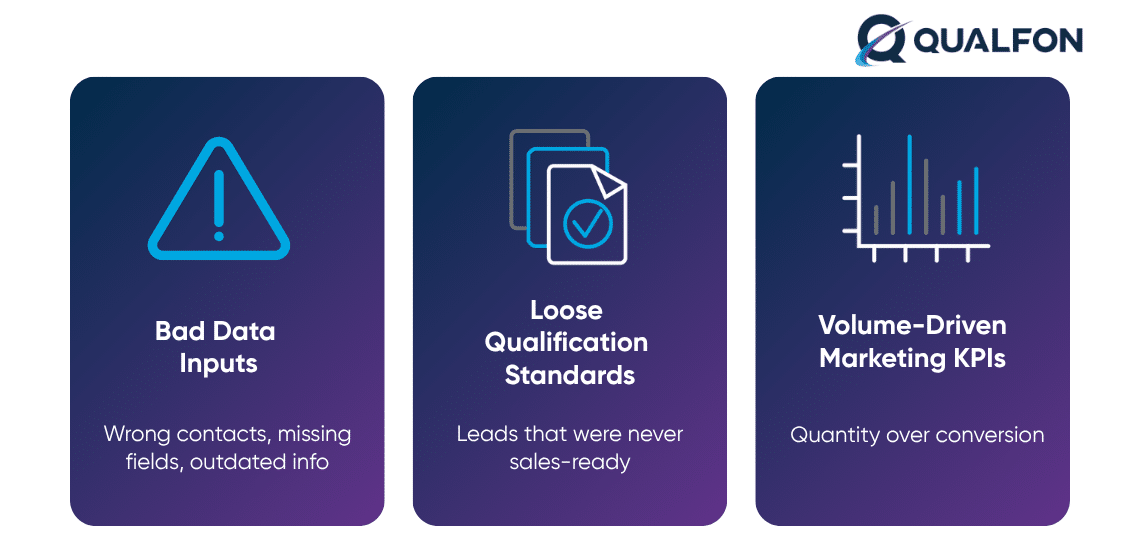
Bad data inputs mean wrong contacts, missing fields, and outdated information entering the funnel. This is the beginning of the end. Bad data is bad data, no matter how you put it. Another common problem is having too loose of qualification standards, leading to leads that were never sales-ready. This is enough of a problem, and if it’s coupled with marketing KPIs that reward volume over conversion, the pipeline fills with quantity at the expense of quality.
By the time leads hit your sales team, the damage is already done.
The Cost of False Confidence
This isn’t just an efficiency issue; it’s a forecasting risk.
When poor-quality leads inflate the pipeline, there are a few trickle-down effects:
- Forecasts become unreliable
- Sales teams waste time chasing dead ends
- Leadership makes decisions based on misleading data
And ultimately, revenue targets are missed, not because of effort but because of input quality. Once you have tackled data input quality, you’re ready for the next step.
Focusing on Efficiency
What do I mean when I say efficiency? It’s simple…making sure the leads that are handed off to sales are worthy of contacting. Remember, bad data creates bad leads, which breeds unreliable forecasts, frustrated sales reps, and broken trust. There are a few things to consider that will help the team focus on efficiency:
- Implement a lead validation process before handoff
- Set strict definitions of sales-ready leads – document it and socialize them internally so everyone is on the same page
- Be sure marketing can track conversion rates by source
- Start measuring revenue per lead in addition to cost per lead
It’s easy to get caught up in the volume game, but a smaller sales pipeline of high-quality opportunities will outperform a bloated pipeline every time.
Taking the Next Step
Once you have confidence in your data inputs and internal processes in order, it may be time to consider finding a sales performance partner that can quickly analyze lead performance by source and unlock more personalized outreach opportunities. This is done by identifying key personas within the dataset.
If you have quality leads from reliable sources, you’re heading in the right direction. This next step is where data segmentation comes into play, with the ultimate goal being clearly defined lead personas. Curious to learn more? Contact us.
About Qualfon
Qualfon is a global provider of omnichannel customer experience and business support solutions. From call center support to lead generation to ecommerce fulfillment, we support our clients and their customers throughout the customer journey.
Learn more about Qualfon’s Revenue Operations Solutions and Services.
About Author
Maria Tenaglia brings more than 20 years of experience driving revenue growth across healthcare, technology, and media. She has served as both Chief Revenue Officer and Chief Sales Officer, leading sales strategy, partnerships, and customer acquisition for organizations ranging from early-stage startups to established enterprises.
Most recently, she spent nearly three years as VP of Growth for Banking, Financial Services and Insurance at TTEC before joining Qualfon as VP of Business Development in 2026. Her experience sitting in the revenue seat gives her a grounded perspective on the pipeline and forecasting challenges that RevOps teams face every day.
Connect with Maria on LinkedIn.