



7 Things to Look for When Choosing a 3PL Partner

The third-party logistics (3PL) market is growing fast, and so is the number of providers competing for your business. With the U.S. 3PL market projected to reach $685 billion by 2033, according to Mordor Intelligence, brands have no shortage of options. The harder question is not whether to outsource fulfillment.
Why 2026 Is a Turning Point for Ecommerce Fulfillment

Prosper Show 2026 (March 10–12 at the Wynn Las Vegas) highlighted a crucial point: ecommerce brands can no longer afford to be reactive. Amazon is rapidly evolving, and many brands may not realize the effects until they start impacting their operations and revenue. For brands that rely on Amazon, this isn’t just another update—it’s a shift in how fulfillment, compliance, and growth need to work moving forward.
Same Warehouse, Different Job: Fulfillment Centers vs. Distribution Centers

These two terms appear constantly in logistics conversations, often as if they mean the same thing. They do not. Fulfillment centers and distribution centers serve different customers, handle inventory differently, and require entirely different operations. Choosing the wrong model, or working with a partner who only supports one, creates gaps in your supply chain that show up as delayed orders, misrouted freight, and missed service commitments.
How Warehouse Automation Systems Build Order Accuracy Into Every Step

A picker grabs the wrong item. A box ships missing one of three components. Each mistake seems small on its own, but across thousands of orders, these errors compound into returns, reshipping costs, and customers who don’t come back.
What Does “Kitting” Mean in Fulfillment?

Your warehouse team is spending hours every week assembling the same product combinations. An associate grabs Item A from one shelf, walks to another aisle for Item B, returns to pack them together, prints a label, and repeats the process hundreds of times. Each order takes five minutes to pick and pack when it should take one.
Amazon FBA Prep Services Ending January 1, 2026: Your Readiness Checklist

Amazon’s August announcement marks a major shift for FBA sellers. Starting January 1, 2026, Amazon will no longer offer prep and item labeling services for U.S. FBA shipments. Every unit arriving at an Amazon fulfillment center must be fully prepped, including labeling, poly-bagging, bundling, and protective packaging, prior to arrival.
What Matters Most to Customers During the Q4 Holiday Shopping Period

The Q4 holiday chaos arrives like clockwork, yet catches businesses off guard year after year. For decades, holiday shopping began with Black Friday, the day after Thanksgiving, when retailers opened early and shoppers lined up for doorbuster deals.
Q4 Fulfillment Mastery: The Strategic Advantage That Defines Holiday Success
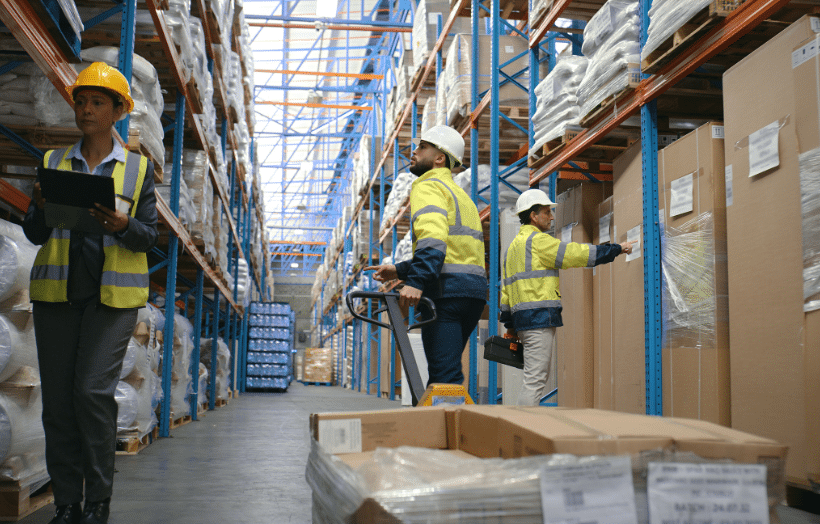
U.S. holiday ecommerce sales are projected to grow 8-9% in 2025, with Q4 accounting for nearly 25% of total retail sales according to the National Retail Federation (NRF). Many brands find themselves unprepared when holiday volume increases arrive each year, despite the predictable timing.
Is Induction Time Slowing Your Growth?

For small and mid-sized brands, cash flow is everything. Every dollar sitting in inventory is a dollar you cannot put into marketing, product development, or anything else that drives growth. One of the biggest drivers of that problem is induction time, the period it takes for inventory to be received, processed, and made available for sale once it hits a fulfillment center.
Why Smart Brands Are Moving Toward a Hybrid Fulfillment Model

In the fast-paced world of ecommerce, speed is crucial, but flexibility is equally important. Consider a popular home gadget that sells out rapidly during a holiday promotion alongside a bulky, niche item that sells steadily but at a slower pace. Treating both products the same way in your fulfillment strategy can either erode profit margins or frustrate customers.